EV Charging Cards Without Monthly Fees: How to Choose
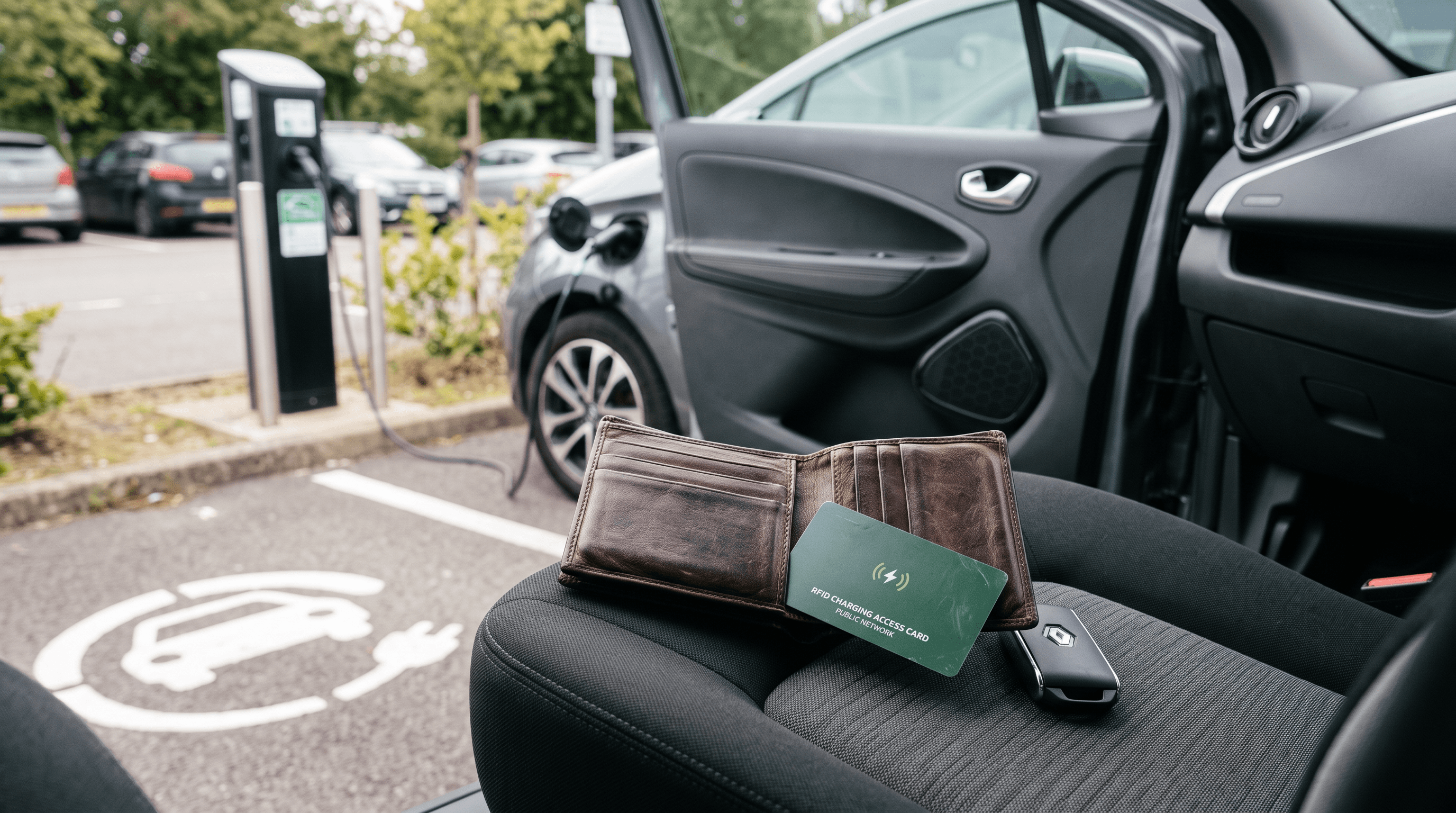
A charging card without a monthly fee can suit occasional public charging, a second car or an emergency backup. It does not mean free charging: you still pay for energy and possibly the card, delivery, sessions or connection time. Choose it by the stations you use, not the largest advertised network.
What does “no monthly fee” actually include?
Separate three costs: keeping the account, obtaining the physical card and using a charger. A free app does not necessarily include a free RFID card. An RFID card identifies your charging account; it is not a bank card and does not carry a universal electricity price.
Read the tariff for your exact account type. Energy-customer discounts, vehicle-owner offers and temporary campaigns may have eligibility requirements. Keep a copy of the terms when ordering, particularly if an introductory offer later changes.
Start with the charging stops you actually need
Write down where public charging fits into your week: near home, during shopping or on a regular journey. Check the exact connector, access hours and available payment methods. A large network total is less useful than a suitable point you can reach when you need it.
The practical question is whether you can see the price, reach the station and start the session with your chosen payment method. StromNow brings station search, charging prices and route planning together, so you can prepare that decision before leaving.
Calculate the total cost of your charging routine
A plan without a monthly fee can still include energy charges, a card fee or time-based charges. Look at a typical month and separate one-off costs from costs that recur every time you charge. The advertised kWh price alone does not tell you the monthly total.
A simple session calculation
For a fictional session of 30 kWh at €0.60/kWh, the energy cost is €18. Add any applicable session or time fee separately. These figures explain the calculation; they are not a StromNow price or a current offer. Use the price shown for your selected point before starting.
If you charge only occasionally, focus on the sessions you actually expect to make. If your routine changes, revisit the calculation using your own charging history. Our charging-price guide explains the cost components in more detail.
What makes a useful backup card?
A backup should offer an independent way to start a session at realistic alternatives. Two brands do not automatically provide independent coverage if both depend on the same unavailable station. Activate the card before travelling, complete one test charge and store the support contact. A card helps when your phone battery is empty, but cannot repair a charger or guarantee connectivity in its backend.
Make the decision from your routine
If you charge publicly only a few times a year, avoid paying a recurring fee merely for reassurance. If your usage becomes regular, repeat the calculation with actual invoices. Review idle fees before leaving the car for several hours and keep a card-rejection checklist available. StromNow’s pricing information is another relevant reference when comparing your existing charging options.
Make your next charging stop simpler
Find nearby charging points and review prices in StromNow before choosing where to charge. You can use the app to plan the stop and check whether it fits your everyday route. Explore StromNow and download the app.
Editorial review: 5 September 2026. Check current station conditions before charging.
Frequently asked questions
Is a charging card without a subscription always cheapest?
No. It avoids a fixed monthly cost, but a subscription can cost less when enough charging takes place at its discounted stations. Compare your monthly total.
Can I charge without receiving a physical card?
Often yes, if the station accepts the provider’s app or direct payment. Check the supported start methods before relying on this.
How many charging cards do I need?
There is no fixed number. Start with a payment method covering your normal stops and one practical alternative for the routes you drive.